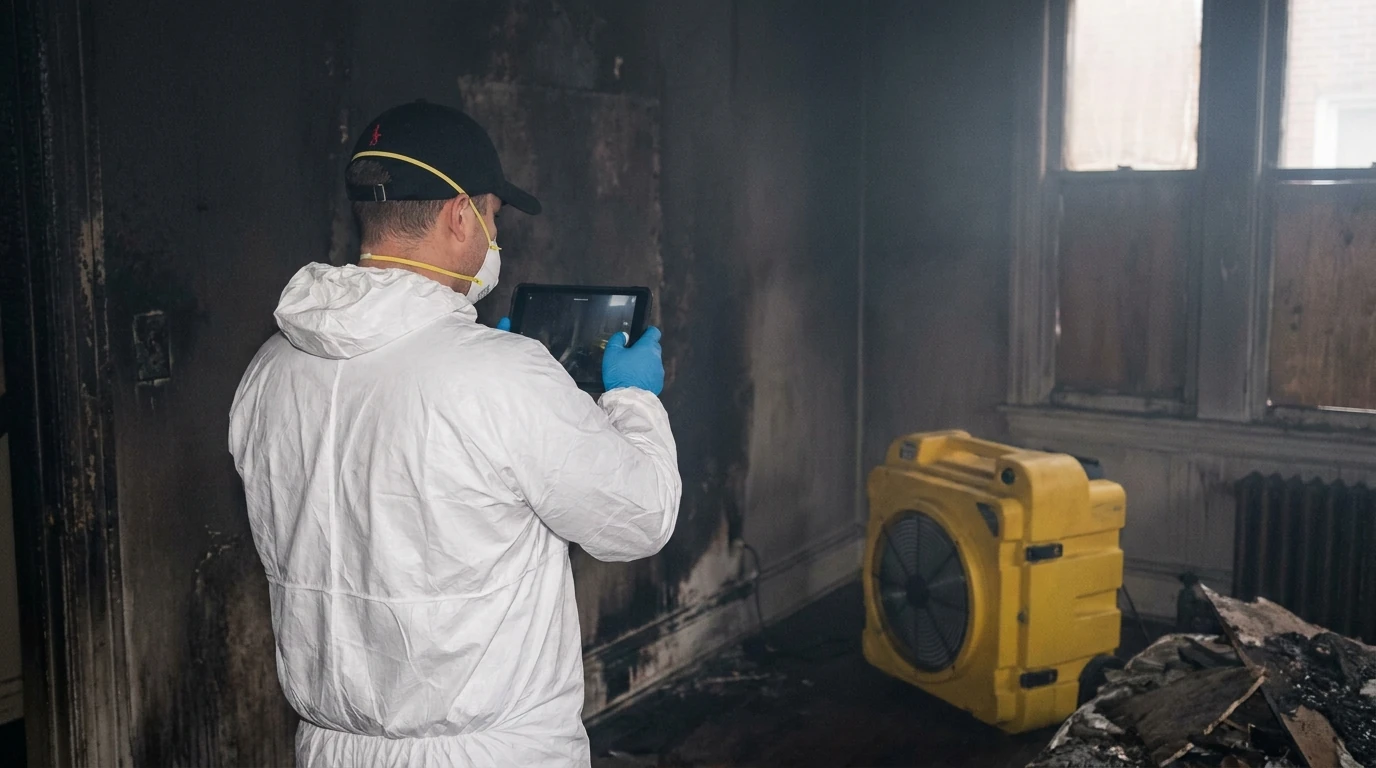
TL;DR: Fire damage restoration in Butler, PA typically costs $3,000 to $8,000 for smoke-and-soot-only damage in a single room, $25,000 to $55,000 when fire and smoke spread across a whole floor, and $75,000 or more for a full structural rebuild. Homeowners insurance usually covers most of this once a claim is approved, after the deductible. The actual number depends on how far the fire traveled, how much smoke moved through the ductwork, and how much of the structure needs rebuilding rather than cleaning.
If you’re standing in your Institute Hill or Lyndora home the morning after a kitchen or furnace fire, trying to get a number before the adjuster even calls back, here’s why the range is so wide: “fire damage restoration” actually covers two different jobs. One is cleaning soot and smoke residue off surfaces that survived. The other is tearing out and rebuilding what didn’t. Butler’s housing stock predates 1950 in a lot of neighborhoods, brick foursquares and frame homes running original cast-iron stacks and fuse-era electrical, which is part of why fire frequency runs above the regional average here. Knowing which category your loss falls into is the first step to understanding what you’ll actually pay.
How much does fire damage restoration cost in Butler, PA?
Most Butler County fire losses fall somewhere between $3,000 for a contained, smoke-only incident and well over $100,000 for a structure fire that requires a rebuild. The table below breaks out typical ranges by loss size, based on how far smoke and flame actually traveled.
| Loss Scenario | Typical Cost Range |
|---|---|
| Single room, smoke and soot only (no structural burn) | $3,000 - $8,000 |
| One room with fire damage, smoke throughout that floor | $10,000 - $25,000 |
| Kitchen or appliance fire with moderate spread | $15,000 - $35,000 |
| Whole-floor fire and smoke damage | $25,000 - $55,000 |
| Full structure fire requiring teardown and rebuild | $75,000 - $150,000+ |
For context, the Insurance Information Institute tracks average fire and lightning claim severity nationally near $84,000, which lines up with what a serious, multi-room Western PA fire loss tends to run once smoke cleanup, content restoration, and rebuild are added together. A small kitchen fire contained to one cabinet run costs a fraction of that; a bedroom fire that spreads into an attic does not.
What drives fire damage restoration costs up or down?
The single biggest cost driver is how far smoke traveled through the house, not how big the visible flame damage looks. Smoke and soot particles ride the HVAC system into rooms that never saw fire, and every one of those rooms needs cleaning, sealing, and often repainting.
Other factors that move the number:
- Class and source of fire. A grease fire deposits a different residue (oily, protein-based) than a wood or synthetic-materials fire, and the cleaning method changes accordingly.
- Water damage from suppression. Fire department hose lines and sprinkler discharge often leave a secondary water loss that has to be dried and dehumidified before any rebuild starts.
- Age and construction of the home. Older Institute Hill and Lyndora homes with plaster walls, original trim, and galvanized or cast-iron systems cost more to restore to a matching finish than a newer build with drywall and standard fixtures.
- Contents vs. structure. A full-house smoke event with upholstered furniture, electronics, and clothing adds a parallel contents-restoration or replacement cost separate from the structural number.
- How fast the loss gets secured. An open roof or broken window left unsealed invites weather and secondary water damage, which raises the final bill. Emergency board-up and tarping within hours of the fire is one of the few steps homeowners can control.
Furnace and space-heater fires also tick up every year as heating season starts, which is worth knowing if your loss happened while running a portable heater or an older forced-air system.
Does homeowners insurance cover fire damage restoration costs?
Yes, a standard homeowners policy (typically an HO-3 form) covers fire as a named peril, and most of the cost above the deductible is paid by the insurer once the claim is approved. Dwelling coverage pays for structural rebuild, personal property coverage pays for damaged contents, and additional living expense (ALE) coverage pays for temporary housing if the home isn’t livable.
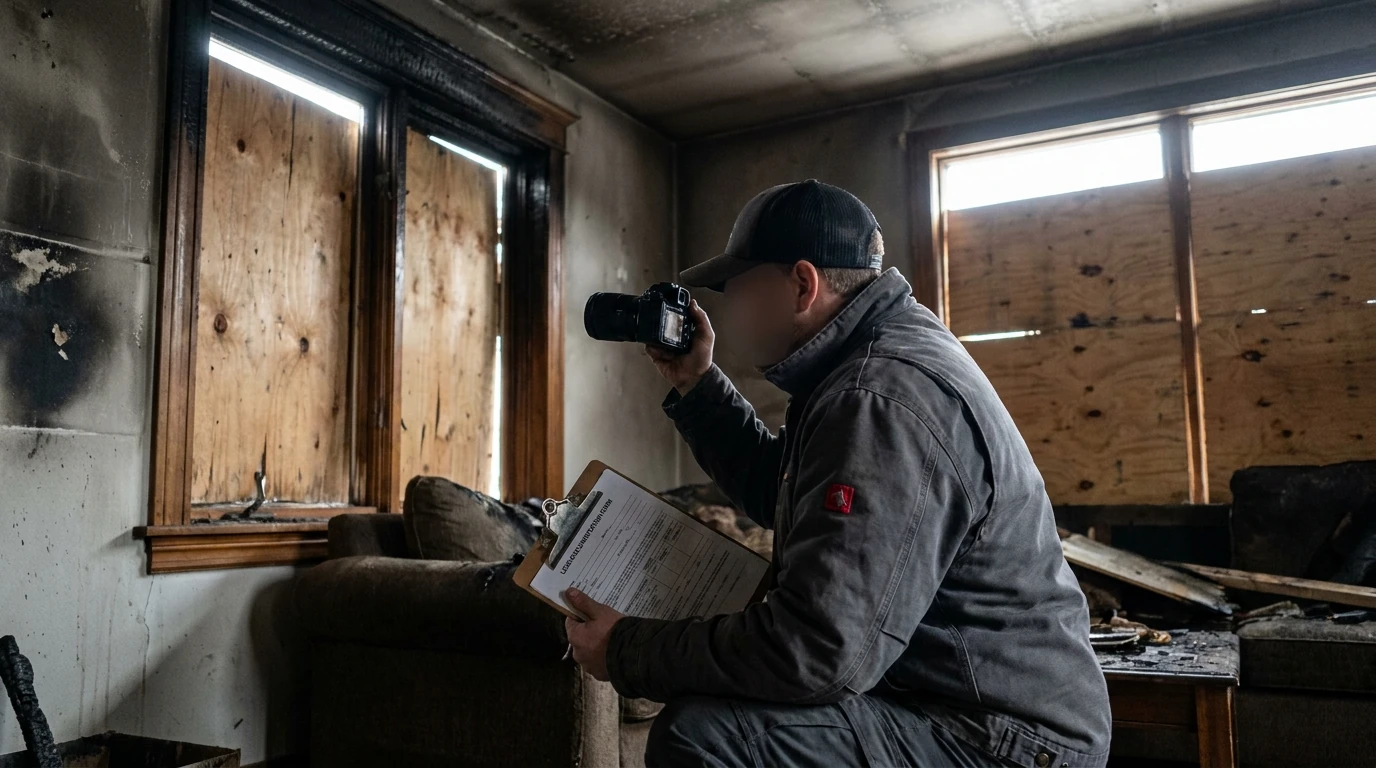
What affects the payout: your deductible (commonly $1,000 to $2,500, sometimes a percentage of dwelling value on older Pennsylvania policies), your dwelling coverage limit relative to the actual rebuild cost, and whether you carry replacement-cost or actual-cash-value coverage on contents. The claim moves faster and cleaner when there’s thorough documentation from day one: dated photos of every damaged room, an itemized contents inventory, and a written scope of loss that separates cleaning from reconstruction. A fire investigator’s cause-and-origin report also factors into both the claim and, sometimes, a subrogation question if a faulty appliance or wiring caused the fire.
What does the fire damage restoration process actually involve?
The process runs through five phases, and cost is tied to how many of them your loss requires. A smoke-only loss might skip straight to phase three; a structure fire goes through all five.
- Emergency securing. Board-up, roof tarping, and power shutoff happen within hours to stop further damage and weather intrusion.
- Assessment and documentation. A written scope of loss, moisture and soot mapping, and photo documentation for the insurance file.
- Water extraction, if needed. Suppression water and sprinkler discharge get pulled and dried before cleanup starts, following standard drying protocols.
- Soot and smoke cleanup. HEPA vacuuming, chemical sponging, and content cleaning remove residue from surfaces that survived.
- Deodorization and reconstruction. Thermal fogging, ozone or hydroxyl treatment, and HVAC/duct cleaning address odor; drywall, flooring, cabinetry, and paint bring the structure back to pre-loss condition. Our longer walkthrough of this process covers each phase in more detail.
Get the written scope before any demolition starts. It’s the document that protects your claim and the number you’ll compare against the insurer’s estimate.
Every fire is different, and no restoration company should quote a fixed number before walking the property and documenting the loss. If you’re dealing with a fire loss anywhere in Butler, Butler Township, or East Butler right now, call FireDEX Butler at (724) 452-7400 for an on-site assessment and a written scope before anything gets torn out.
About FireDEX Butler
This guide was written by Bob Randig, with input from the crew that handles these calls across Butler County. Founded in 1981, the company holds Pennsylvania Home Improvement Contractor registration PA001913 through the Attorney General’s office and runs 24/7 out of Cranberry Township, serving Butler and the surrounding county. Its service lines cover fire damage restoration, smoke damage cleanup, emergency board-up and tarping, contents restoration, and full reconstruction after a loss.