TL;DR: In the first 24 hours after a house fire, get everyone to a safe distance, let the fire department fully clear the structure before anyone goes back in, arrange emergency board-up to secure doors and windows, call your insurance company to open a claim, and start a written, photographed list of damaged belongings before anything gets moved or cleaned. Don’t eat food, run appliances, or sleep in a smoke-affected home until a professional has assessed air quality and structural safety.
If you’re standing on the lawn right now watching the last of the smoke clear while a fire marshal walks your hallway with a flashlight, you don’t need a lecture on fire prevention. You need to know what happens in the next few hours, this week, and who actually gets you through it. With more furnaces and space heaters coming on across Cranberry Township this October, this is the sequence that protects your family, your insurance claim, and whatever is left of the house.
Can You Go Back Inside After a House Fire?
No, not until the fire department or a building official has formally cleared the structure, even if the flames looked contained to one room. Fire weakens framing, melts wiring insulation, and can leave hot spots inside walls that reignite hours later. The Pennsylvania municipal fire marshal or responding department decides when it’s safe to re-enter, not the homeowner.
Once you’re cleared, go in briefly and only for essentials: medication, a phone charger, pet supplies. Don’t run the furnace, don’t flip breakers back on without an electrician’s sign-off, and don’t eat anything that was in the kitchen during the fire or sat in a freezer that lost power. The U.S. Fire Administration’s after-a-fire guidance walks through the same re-entry caution in more detail if you want the federal source.
What Are the First Steps After a House Fire?
The first steps are safety, documentation, and securing the structure, roughly in that order, within the first day. Here’s the sequence that actually protects you:
- Confirm everyone is accounted for and get medical care for smoke inhalation symptoms (coughing, headache, dizziness), even if no one was visibly burned.
- Get the official all-clear from the fire department before re-entering.
- Call your insurance company to open a claim and ask what emergency mitigation costs they’ll cover right away, including temporary housing if the home is uninhabitable.
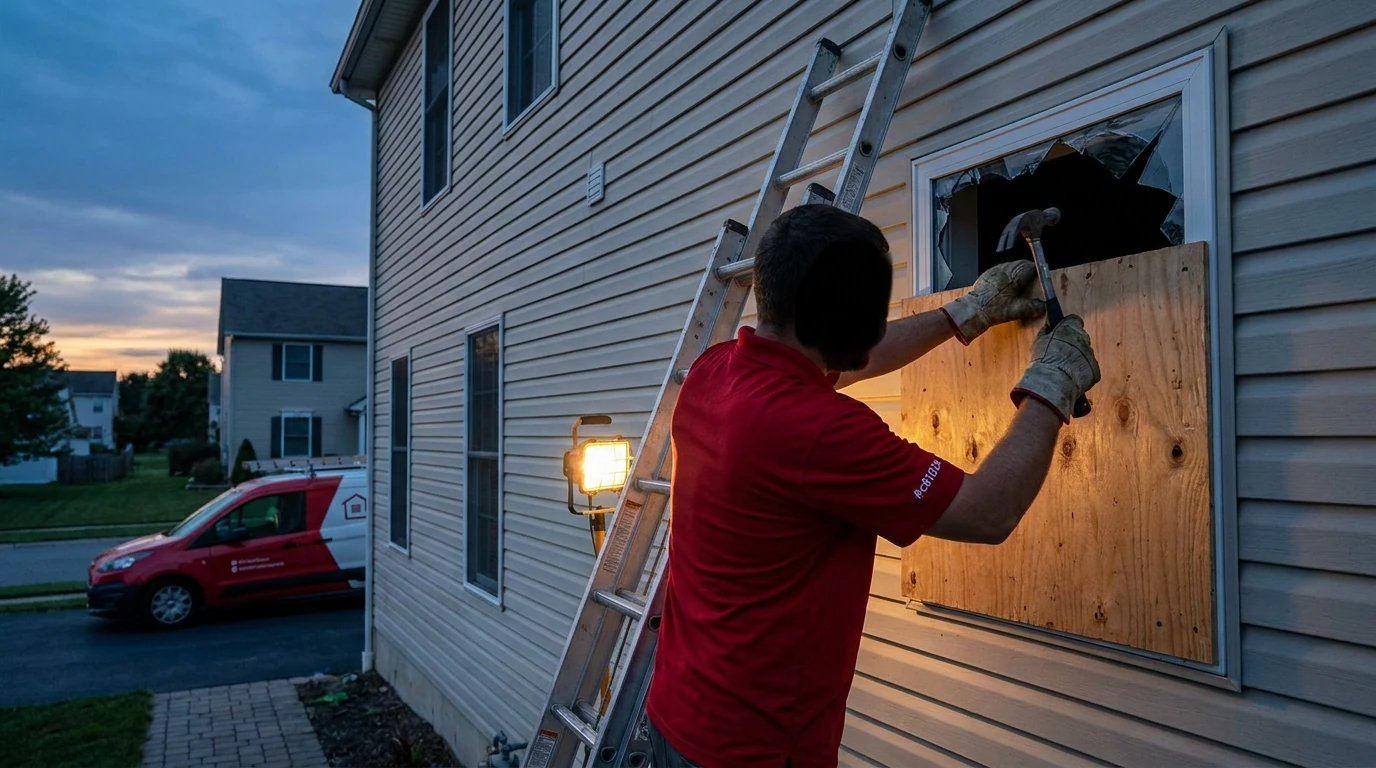
- Arrange emergency board-up and tarping for any broken windows, burned-through roof sections, or doors forced open during the fire. An open structure invites weather damage, animals, and theft, all of which complicate a claim.
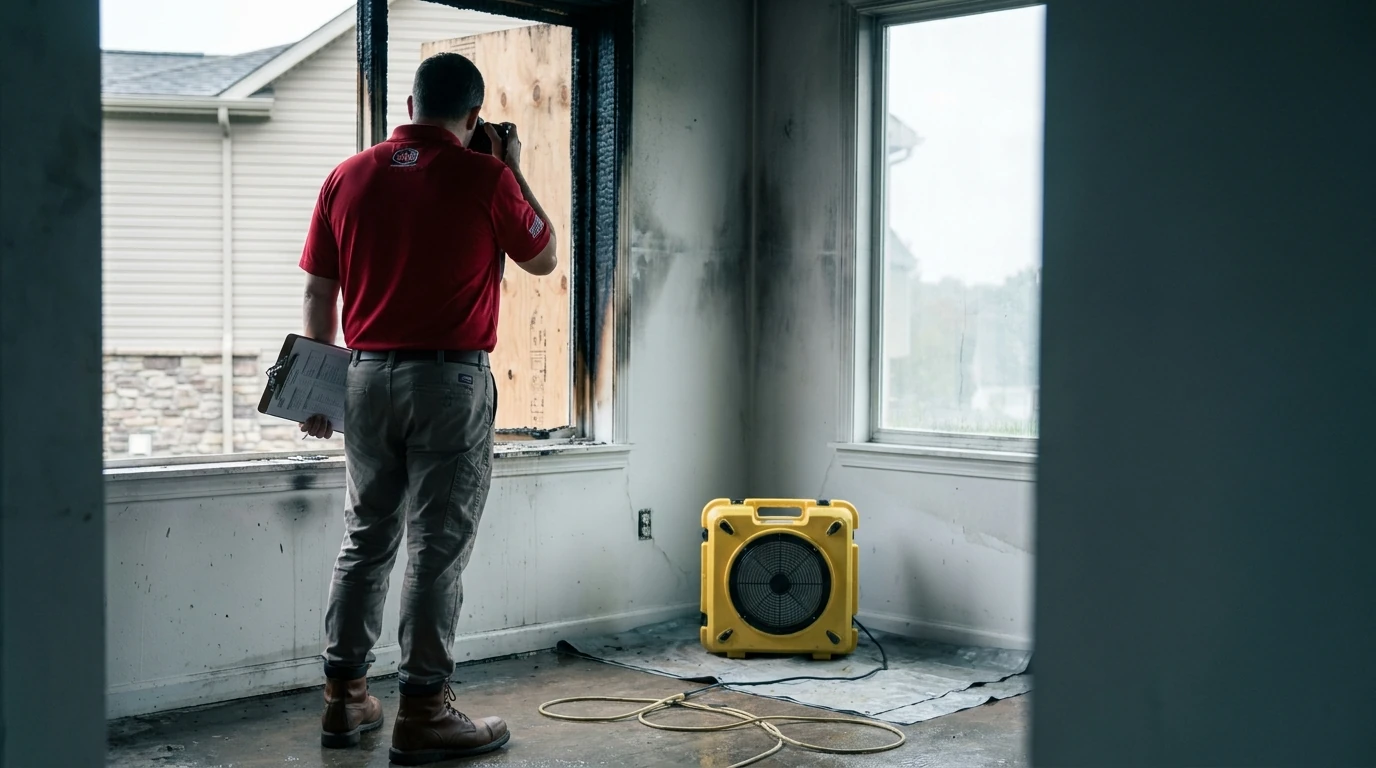
- Photograph everything before you touch anything. Damaged furniture, scorched walls, soot-covered electronics. Adjusters and restoration estimators both work from what you can show them, not what you describe after the fact.
- Call a fire and smoke restoration company, not a general cleaning crew, for the mitigation work. This is where FireDEX Butler comes in for Cranberry Township and Butler County homeowners: the shop is on Marshall Rd, the line runs 24/7, and board-up plus soot and smoke mitigation can start the same day a structure is released.
Don’t start scrubbing soot off walls yourself. Dry wiping often grinds residue deeper into drywall and fabric, and wet-cleaning the wrong surface before it’s been assessed can set staining permanently.
What Is Smoke Damage, and Can You Live With It?
Smoke damage is the residue, odor, and corrosive film left behind after combustion, and it spreads far beyond the room that burned. Soot particles ride on heat and air currents through HVAC ducts, into closets, and behind outlet covers, which is why a kitchen fire can leave a sour, acidic smell in an upstairs bedroom.
Whether you can stay in the house depends on where the smoke traveled and what burned. A small, contained fire with light smoke drift in a well-ventilated home might be livable within a day or two once air scrubbing starts. A fire involving synthetic materials (carpet, foam furniture, plastics) releases more corrosive byproducts and usually means relocating until odor and air quality testing clear the space. Protein residue fires, like a stovetop grease fire, leave an almost invisible but intensely sticky, pungent film that’s deceptively hard to live with even when nothing looks burned.
If anyone in the home has asthma, is pregnant, elderly, or very young, treat any visible soot or lingering smell as a reason to stay elsewhere until a professional confirms the air is clear. Our companion post on how professionals remove smoke odor covers why DIY odor fixes (candles, air fresheners, baking soda) mask the smell instead of removing the source.
How Long Does Fire Damage Restoration Take?
Most residential fire damage restoration takes two to six weeks from the first walkthrough to final repairs, depending on how much of the structure burned versus how much just took on smoke. A single-room fire with smoke drift into one or two adjoining rooms, cleaned and deodorized without structural rebuild, often wraps in one to two weeks. A fire that burned through framing, flooring, or a roof section adds reconstruction time on top of the cleaning phase, which is where timelines stretch into the six-to-ten-week range.
The phases generally run: emergency board-up and water removal (if the fire department used hoses), contents inventory and pack-out, soot and surface cleaning, HEPA air scrubbing and odor treatment, then any rebuild. Our fire damage restoration process walkthrough breaks down each phase in more detail if you want to see what’s actually happening behind the scenes while your family is staying somewhere else.
What Should You Do Next?
Your next move is getting a written scope of the fire and smoke damage before you agree to any repair work or sign anything with your insurer beyond the initial claim. A documented, room-by-room scope protects you if the adjuster’s first estimate comes in low, and it becomes the record your contractor works from.
Families in Fernway, Fox Run, and the Park Place area of Cranberry Township have the same basic decision in front of them after a fire: secure the structure, document the loss, and get a professional assessment before cleanup starts. Scheduling a fire damage assessment early, even same day, gives you that documentation while the scene is still intact enough to be useful to the insurance company.
Fire damage is disorienting precisely because there’s no manual for it. The sequence above, safety first, documentation second, professional mitigation third, is the same order a structural fire marshal or claims adjuster would tell you to follow. Taking it one step at a time, rather than trying to solve the whole loss on day one, is what actually keeps the process moving.
About FireDEX Butler
This restoration company has served Cranberry Township and Butler County, PA since 1981, operating a 24/7 emergency line out of its Marshall Rd shop and holding Pennsylvania Home Improvement Contractor registration PA001913. Their crews handle fire, water, storm, mold, and contents restoration across Cranberry Township, Wexford, Mars, Zelienople, and the surrounding Pittsburgh North suburbs, working directly from documented, photographed scopes on every loss.