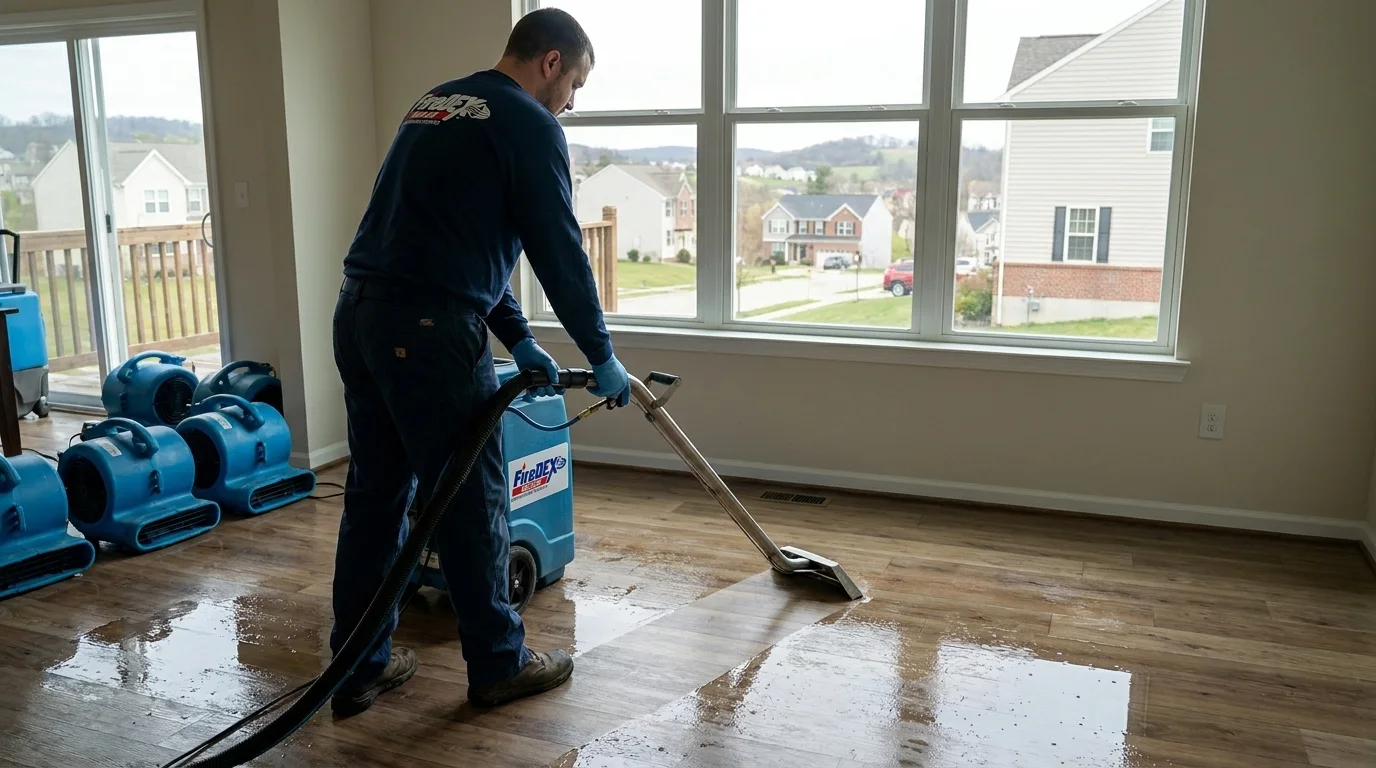
24/7 Emergency Water Removal & Cleanup in Cranberry Township
24/7 emergency water removal and cleanup in Cranberry Township and surrounding areas. Insurance billing accepted. Call (724) 452-7400.
Water pooling under your flooring or spreading across a basement floor right now? FireDEX Butler answers 24/7 and dispatches extraction equipment the same call, because standing water doesn’t wait for business hours and neither do we. A burst supply line, a failed sump pump, or a sewer backup behaves differently depending on the source, but every hour of delay pushes water further into subfloor, drywall, and insulation where it’s harder and more expensive to remove.
What emergency water removal & cleanup actually involves
Emergency water removal isn’t a shop-vac and a few fans. It starts with pulling bulk water out of the structure with truck-mounted or portable extraction units, then identifying where water has traveled beyond the visible wet area, usually further than homeowners expect. Water migrates along the path of least resistance: under baseboards, inside wall cavities, beneath vinyl and laminate flooring, and into the subfloor layers of plywood or OSB. Cranberry Township’s mix of older slab homes and newer construction with engineered flooring both hide water in different ways, which is why the extraction equipment and drying plan have to match the specific materials involved, not a generic checklist.
The category of water matters too. Clean water from a supply line break is handled differently than gray water from an appliance overflow or black water from sewage backup, which requires contamination protocols and more aggressive disposal of porous materials. Standing water that’s been sitting for more than 24 to 48 hours starts supporting microbial growth regardless of how clean the original source was, so timeline is part of the technical picture, not just a sales point.
Our process
- Source control and safety check. Before anything else, we confirm the water source is stopped or contained, check for electrical hazards in flooded areas, and assess structural safety if ceilings or walls are saturated.
- Bulk water extraction. Pumps and extraction wands remove standing water from floors, carpet, and pad, prioritizing rooms where water is actively migrating toward unaffected areas.
- Moisture mapping. We use moisture meters and thermal imaging to find water that’s moved into wall cavities, subfloor, and structural framing, areas that look dry on the surface but aren’t.
- Structural drying and containment. Air movers and dehumidifiers are placed based on the moisture map, not just the visible wet footprint. For Category 2 or 3 water, we isolate the affected zone to keep contamination from spreading to dry areas of the home.
- Daily monitoring. Moisture readings are logged and compared against drying goals until materials return to normal moisture content, which is what determines when drying equipment comes out, not a fixed number of days.
What separates a good water removal response from a bad one
The most common mistake is treating the visible wet area as the whole job. Carpet gets extracted, a couple of fans go in, and the crew leaves, while water is still sitting inside the wall cavity or under the flooring. Weeks later the homeowner smells something musty and finds out the drywall never actually dried out.
A thorough response checks moisture content in materials adjacent to the visible damage, not just the obvious wet spot, and documents those readings with photos and logs. That documentation matters for two reasons: it tells you when the structure is actually dry, and it’s what insurance adjusters want to see to justify the scope of work and equipment runtime on a claim. Drying logged and measured against the IICRC S500 standard gives both the homeowner and the carrier a clear record instead of a guess about when the job was finished.
Another gap is flooring. Water under laminate or engineered hardwood can look fine on top while the subfloor underneath is saturated, and pulling flooring to dry the subfloor properly is sometimes necessary even when it adds a step the homeowner didn’t expect.
What does emergency water removal & cleanup cost?
Costs vary by how much water intruded, what materials absorbed it, and how long it sat before extraction started. These are typical industry ranges, not a quote, every loss is different and FireDEX Butler provides a written scope of work before any work begins.
| Scenario | Typical range |
|---|---|
| Single room, clean water, caught early | $1,200 - $3,500 |
| Multiple rooms, clean to gray water | $3,000 - $7,500 |
| Basement flooding, standing water over 24 hours | $4,500 - $10,000 |
| Category 3 water (sewage or contaminated source) | $6,000 - $15,000+ |
| Flooring removal and subfloor drying required | add $1,500 - $4,000 |
Most homeowners insurance policies cover sudden and accidental water damage, such as a burst pipe or appliance failure, but typically exclude gradual leaks or flood water without separate flood coverage. Reading the specific policy language matters here, and we document the loss in a way that supports whichever claim path applies.
Seasonal & regional considerations
Western Pennsylvania winters bring freeze-thaw cycles that are a leading cause of pipe bursts, particularly in unheated crawlspaces, garages, and exterior walls of older Cranberry Township homes. A pipe that freezes overnight and thaws the next afternoon can release water for hours before anyone notices, especially in a basement or behind a wall. Spring snowmelt combined with heavy rain also raises the risk of sump pump failure and basement seepage in homes built on the area’s clay-heavy soil, which drains slower than sandy soil and holds water against foundations longer.
Service area
FireDEX Butler is based in Cranberry Township and responds to emergency water removal calls throughout the surrounding Butler and Allegheny County communities.
Standing water doesn’t stay contained to one room for long. Call (724) 452-7400 to schedule your moisture assessment and get extraction equipment moving before the damage spreads further into your home’s structure.
Services We Handle
- 24/7 Emergency Water Cleanup
- Air Dry
- Appliance Leak Cleanup
- Flood Water Removal
- Standing Water Removal
- Water Extraction
- Water Heater Flood Cleanup
Frequently Asked Questions
Does homeowners insurance cover emergency water removal and cleanup?
How long does structural drying typically take after a water loss?
What's the difference between Category 1, 2, and 3 water?
Can flooring be saved after standing water, or does it have to come out?
What should I do while I'm waiting for water removal to start?
Looking for the best emergency water removal & cleanup company in Cranberry Township?
FireDEX Butler provides licensed and insured emergency water removal & cleanup in Cranberry Township, PA and the surrounding area, and has served local property owners since 1981. Customers rate us 3.7 out of 5 stars across 13 Google reviews. We answer calls 24/7 — call (724) 452-7400 for immediate help.
Need Emergency Water Removal & Cleanup now?
We respond 24/7 across Cranberry Township and surrounding PA cities.
Related Coverage
- Our Restoration Services
- Contact FireDEX Butler
- Restoration Services in Aliquippa
- Restoration Services in Allison Park
- Restoration Services in Baden
- Restoration Services in Beaver Falls
- Restoration Services in Bell Acres
- Restoration Services in Big Beaver
- Restoration Services in Butler
- Restoration Services in Economy
- Restoration Services in Ellwood City
- Restoration Services in Evans City
- Restoration Services in Franklin Park
- Restoration Services in Gibsonia
- 24/7 Emergency Water Damage Restoration in Cranberry Township