TL;DR: When your basement floods, do three things before anything else: shut off electricity to the basement at the breaker panel, stop the water source if you can, and do not enter standing water until the power is confirmed off. Then extract the water as fast as possible. Mold can begin growing within 24 to 48 hours of a flood event, so speed matters. The steps below walk you through the first 24 hours in the right order.
You came downstairs this morning and found your basement under water. Maybe the sump pump died overnight during a heavy rain. Maybe a supply line let go. Maybe water is backing up through the floor drain. Whatever happened, the clock is running. Here is what to do, in order, so you protect your family, protect your home, and protect your insurance claim.
Is It Safe To Enter a Flooded Basement?
Do not step into a flooded basement until you have confirmed the electricity is off. Standing water and live circuits are a lethal combination. Go to your main electrical panel and switch off every breaker that feeds the basement, including finished-area outlets, lighting, the sump pump circuit, and any sub-panel in the basement itself. If your panel is in the basement and you cannot reach it safely, call your utility company to cut power at the meter before you go in.
Gas is the second check. If you smell anything like rotten eggs near your gas meter or appliances, leave the house, leave the door open, and call your gas utility from outside. Do not flip any switches. After power and gas are confirmed safe, you can enter.
One more thing: figure out where the water came from before you wade in. The source changes everything about how dangerous the water is.
What Kind of Water Is in Your Basement?
The water category determines how you handle cleanup and what your insurance will cover. The IICRC S500 Standard for Professional Water Damage Restoration defines three categories:
- Category 1 (clean water): Broken supply lines, a failed water heater, a burst pipe. Relatively safe to contact. This is the most common basement flood in newer construction.
- Category 2 (gray water): Washing machine discharge, sump pump overflow carrying soil and debris, dishwasher backflow. Contains contaminants. Requires PPE and proper disposal.
- Category 3 (black water): Water backing up through a floor drain or toilet, sewage overflow, or any outside floodwater that entered through foundation cracks or window wells. Treat this as hazardous. Do not touch it without gloves, rubber boots, and ideally a respirator. Keep children and pets out.
If water is coming up through your floor drain, that is almost always a Category 3 situation. The drain connects to the municipal sewer or your septic system, and backflow means contaminated water is in your basement. Stop using all water fixtures in the house immediately to reduce pressure on the drain, and call a restoration company that handles sewage cleanup before you do anything else in that space.
How Do You Stop the Water and Protect What’s Left?
Stop the source first. If a burst pipe is feeding the flood, shut off the main water supply valve. It is usually near the water meter, often in the basement utility area or where the main line enters the house. If the sump pit is overflowing because the pump failed, check whether the float switch is stuck or the pump has lost power. A backup battery sump pump can bridge the gap while you wait for a repair.
Once the source is stopped, protect what you can. Move salvageable items off the floor: boxes, furniture legs, electronics, anything sitting in water. Do not run extension cords into the flooded area. Photograph everything before you move it. Your insurance adjuster will want documentation of the damage in place, and photos taken before cleanup begins are the most valuable evidence you have. The FEMA flood preparedness guidance also recommends documenting losses with photos and written records before any removal.
Check your sump pit. If the pump is running but water is still rising, the discharge line may be frozen, kinked, or blocked. Trace it to where it exits the house and confirm flow. In a heavy-rain event, the pit may simply be overwhelmed; a second pump or a rental submersible pump can help.
How Do You Dry Out a Flooded Basement?
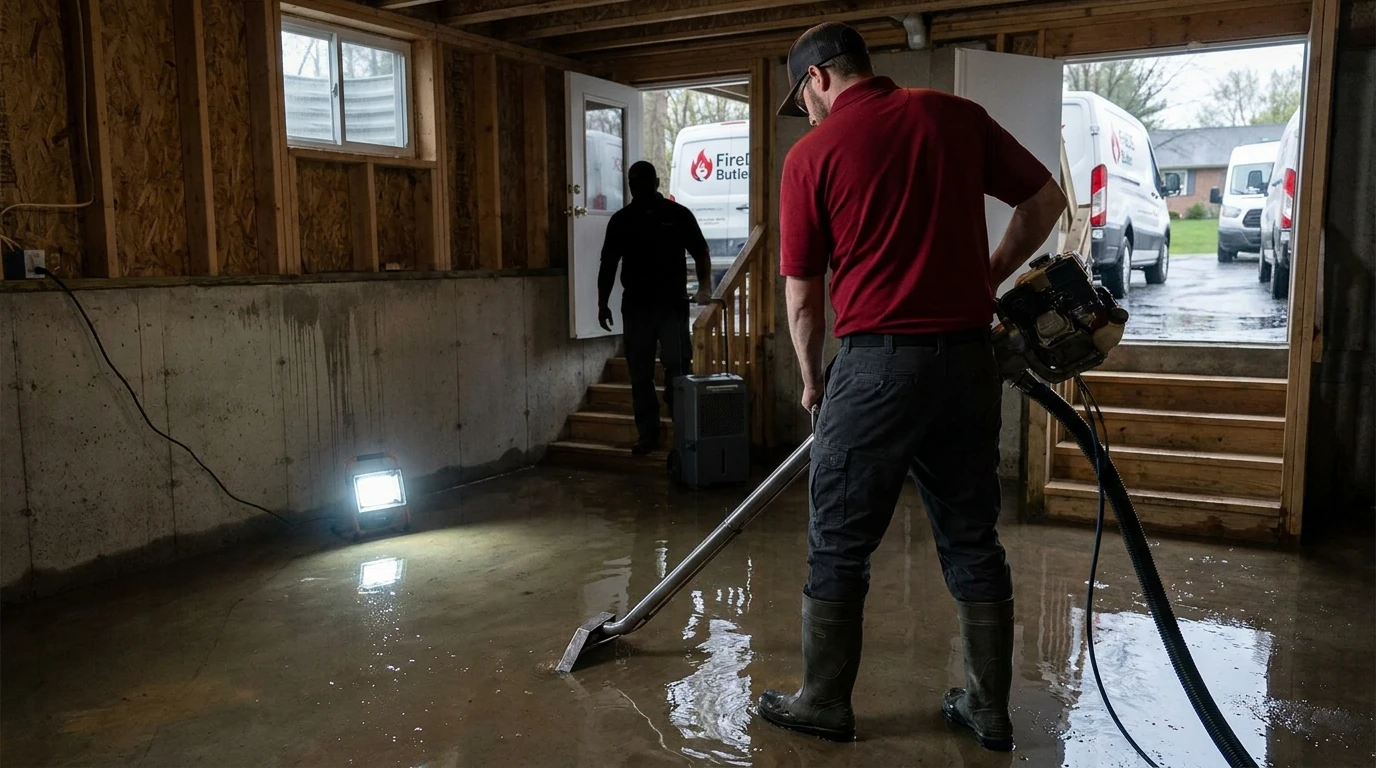
Extraction comes before drying. A wet-vac or submersible pump removes standing water; fans and dehumidifiers handle residual moisture in materials. Skipping straight to fans while there is still an inch of standing water accomplishes almost nothing.
For a finished basement, the drying decisions get harder fast:
Carpet and carpet pad: The pad almost always has to go. It holds water like a sponge and cannot be dried in place effectively. Carpet itself can sometimes be saved if the water was Category 1, extraction was fast, and the backing is not delaminating. If the water was Category 2 or 3, pull it. Trying to save contaminated carpet is a mold problem waiting to happen.
Drywall: Standard drywall wicks water up from the bottom. The rule of thumb used by restoration crews is to cut 12 to 16 inches above the visible waterline, because moisture travels higher than the stain. Leaving wet drywall in place is one of the most common reasons homeowners end up with a mold problem weeks after a flood. See how quickly mold can grow after water damage for what that timeline looks like.
Wood framing and subfloor: These can often be dried in place with the right equipment, but they need to be monitored with a moisture meter. Restoration crews use calibrated meters to track readings over days until materials reach acceptable moisture content per the IICRC S500 standard. Guessing is not a strategy here.
Professional drying typically uses LGR (low-grain refrigerant) dehumidifiers and high-velocity air movers in a calculated pattern based on the square footage and materials affected. A properly set up drying system for a finished basement runs 3 to 5 days on average, sometimes longer for concrete block walls or thick subfloor assemblies. Daily moisture readings confirm progress.
How Long Does It Take To Dry Out a Flooded Basement?
Most residential basement floods take 3 to 5 days to dry to acceptable moisture levels with professional equipment. A large finished basement with soaked framing, concrete walls, and engineered flooring can run 7 days or more. Consumer-grade box fans and a single hardware-store dehumidifier will not get there in that window. They move air but lack the extraction capacity to pull moisture out of wall cavities and concrete.
The longer materials stay wet, the more likely you are to need mold remediation on top of the water damage work. Mold can colonize wet drywall and framing in as little as 24 to 48 hours under warm, humid conditions. Getting the right equipment running on day one is not just about speed; it is about avoiding a second, more expensive problem.
For a broader look at restoration timelines, how long water damage restoration actually takes breaks down the phases from extraction through rebuild.
What Should You Do About Insurance?
Call your insurance company after you have documented the damage and stopped the water source. Do not wait for cleanup to begin before calling, but also do not wait to start mitigation while you wait for an adjuster. Most policies require you to take reasonable steps to prevent further damage. Sitting on wet materials for three days while waiting for an adjuster visit can give the carrier grounds to dispute part of your claim.
Standard homeowners policies typically cover sudden and accidental water damage from burst pipes, appliance failures, and sump pump overflow if you have the sump pump rider. They typically do not cover flooding from outside the home (that requires a separate flood policy through NFIP or a private carrier) or damage from a slow, long-term leak. For a full breakdown of what is and is not covered, does homeowners insurance cover water damage covers the policy patterns in plain language.
A restoration company that handles insurance documentation can help you build the scope of loss, provide moisture logs, and communicate with your adjuster in the language adjusters expect. That documentation is often the difference between a smooth claim and a disputed one.
What To Do Right Now
If you are reading this with water in your basement, here is the short list:
- Cut power to the basement at the breaker panel.
- Check for gas odors. If present, leave and call the utility.
- Identify the water source and stop it if you can.
- Photograph everything before moving anything.
- Determine the water category. If it came from a floor drain or outside, treat it as Category 3.
- Call a restoration company. The first 24 hours are when the biggest decisions get made.
FireDEX Butler responds 24/7 to basement floods across Butler County and the Pittsburgh North suburbs. Their crews handle basement flooding cleanup and water damage restoration from extraction through structural drying and rebuild. Call (724) 452-7400 to reach them any time.
About FireDEX Butler
FireDEX Butler has served Cranberry Township, Butler County, and the surrounding Pittsburgh North suburbs since 1981, operating under Pennsylvania Home Improvement Contractor Registration PA001913. Their crews handle water damage restoration, basement flooding cleanup, sewage cleanup, burst pipe repair, storm damage restoration, fire and smoke damage restoration, mold remediation, and reconstruction across the region. Their shop on Marshall Road in Cranberry Township puts them minutes from most of their highest-frequency service area.