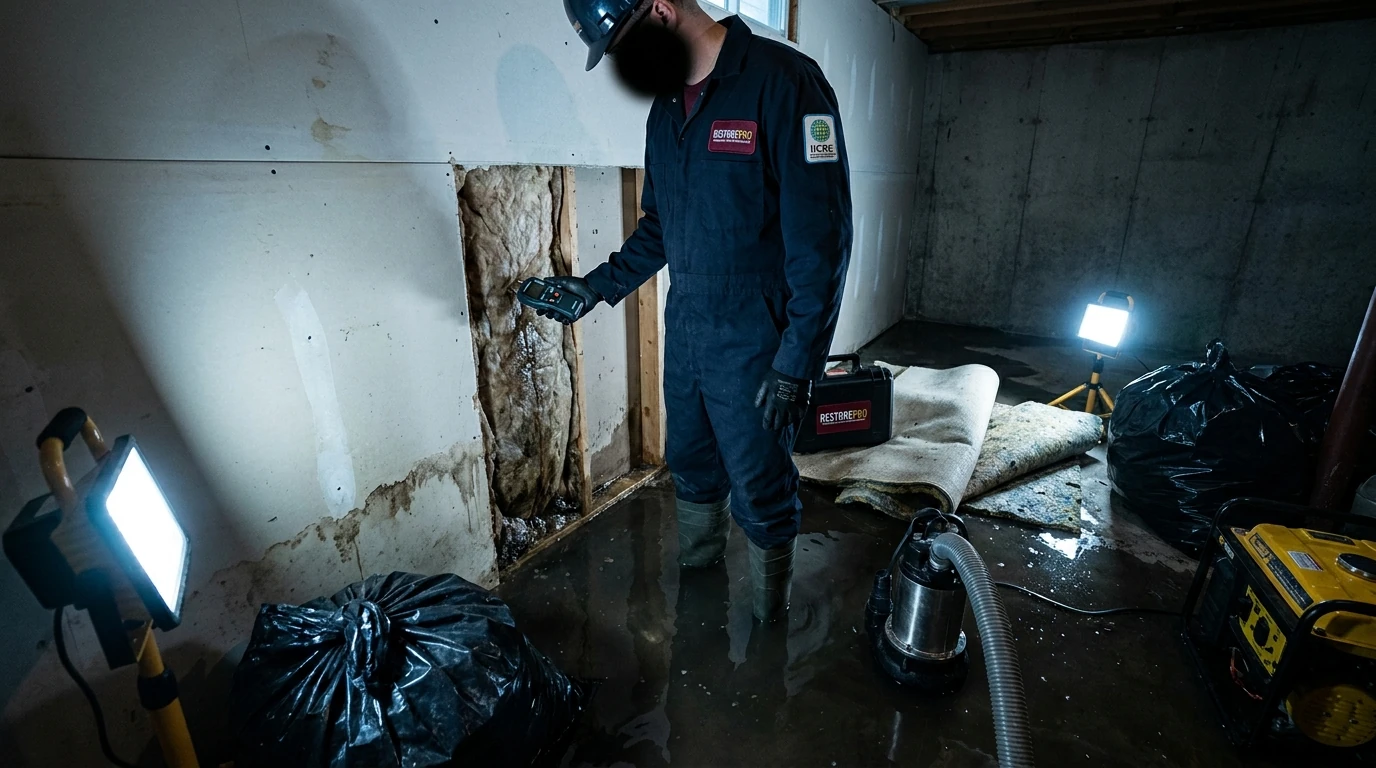
TL;DR: Category 3 water damage, also called black water, is the most hazardous water classification defined by the IICRC S500 standard. It includes sewage backups, floodwater from outside, and any water that has been sitting long enough to become grossly contaminated. Porous materials that contact Category 3 water, including drywall, insulation, carpet, and padding, must be removed rather than dried in place. The longer you wait, the more material gets condemned and the higher the mold risk becomes.
You came home to a basement full of sewage backup, or you found standing water that has been sitting in your home for several days. Either way, you are dealing with something more serious than a burst pipe. The water classification system used by restoration professionals is not just industry jargon. It determines what can be saved, what has to go, and how the work gets done safely. Here is what you need to know before anyone touches anything.
What is Category 3 water damage?
Category 3 water damage is water that is grossly contaminated and carries pathogens, sewage, or other biological agents that pose a health risk. Under the IICRC S500 standard, the industry’s primary technical reference for water damage restoration, Category 3 is the highest contamination level. Sources include sewage backups, toilet overflows that carry fecal matter, floodwater from rivers or storm drains, and water that has sat long enough for bacterial growth to make it unsafe.
The three categories are:
- Category 1 (clean water): Water from a supply line, clean toilet tank, or similar sanitary source. Lowest health risk.
- Category 2 (gray water): Water with some contamination, such as discharge from a dishwasher, washing machine, or a toilet overflow with urine only. Elevated health risk.
- Category 3 (black water): Sewage, floodwater, or grossly contaminated water. Significant health risk.
The term “black water” does not mean the water looks black. It refers to the contamination level. Sewage backup water can appear relatively clear and still be Category 3.
How does clean water become Category 3?
Clean water becomes Category 3 when it contacts sewage, when it comes from outside floodwater, or when it sits long enough for bacterial growth to elevate its contamination level. This escalation is one of the most important things homeowners get wrong.
Here is how it happens in practice. A supply line bursts on a Friday evening. The water is Category 1. By Sunday morning, if that water has been sitting in a warm basement, wicking into drywall and carpet, it has likely escalated to Category 2 or Category 3. Warm temperatures, organic materials like wood framing and drywall, and time create the conditions for rapid bacterial growth. The IICRC S500 standard addresses this escalation directly: water category can change based on elapsed time and the materials it contacts.
For older housing stock with cast-iron drains, such as homes in Butler and Beaver Falls, the risk is compounded. Cast-iron drain lines that are near the end of their service life can back up during heavy rain events when the municipal sewer system surcharges. What starts as a storm event becomes a sewage event. The water in the basement is Category 3 from the moment it enters through a floor drain or cleanout.
The practical rule: if you are not sure how long the water has been there, or if there is any chance it contacted a drain, treat it as Category 3 until a professional assessment says otherwise.
What materials have to be removed after Category 3 water damage?
Porous materials that have been saturated by Category 3 water must be removed and discarded. They cannot be dried in place and declared clean. This is a hard rule under the S500 standard, not a judgment call.
Materials that are typically removed include:
- Drywall and gypsum board: Porous and absorbs contaminated water quickly. Removal usually goes 12 to 24 inches above the visible waterline to account for wicking.
- Carpet and carpet padding: Cannot be decontaminated. Both are removed.
- Insulation: Fiberglass batt and blown-in insulation hold contaminated water and cannot be dried effectively.
- Engineered wood flooring: Laminate and engineered products delaminate and hold contamination. Solid hardwood is evaluated case by case depending on saturation and time.
- Fabric and upholstered contents: Sofas, mattresses, and similar items that were saturated are generally not restorable.
What can often be saved: hard, non-porous surfaces like concrete block, ceramic tile, solid wood studs (after proper cleaning and antimicrobial treatment), and metal framing. The goal of a professional scope is to identify exactly what the contamination line is, remove what must go, and document everything for your insurance claim.
If you have a finished basement with drywall, carpet, and insulated walls, a Category 3 event typically means a full gut of the affected areas. That is not a contractor upselling you. It is the standard-of-care requirement.
Why does timing matter so much?
Every hour of delay after a Category 3 event increases the volume of material that must be removed and the probability of secondary mold growth. Mold can begin colonizing wet organic materials within 24 to 48 hours under the right temperature and humidity conditions, as the CDC notes in its mold cleanup guidance.
The escalation works in two directions at once. Contaminated water continues to wick upward and laterally into more drywall and framing. At the same time, the biological load in the water increases as bacteria multiply. A job that might have involved removing 4 feet of drywall on day one can expand to 8 feet by day three, simply because the water climbed higher as it wicked.
For sewage cleanup specifically, the window for limiting damage is short. Professionals who arrive within hours can often contain the affected zone. Those who arrive days later are managing a much larger scope.
This is also why waiting for an adjuster’s visit before starting mitigation is usually the wrong move. Most homeowners insurance policies require you to take reasonable steps to prevent further damage. Waiting is not a reasonable step when sewage is in the walls. Document everything with photos and video before work begins, then start mitigation. Your adjuster can review the documentation after the fact. For more on how insurance handles water damage, see our guide on does homeowners insurance cover water damage.
What does Category 3 cleanup actually involve?
Category 3 water damage cleanup follows a defined sequence. The work is not simply extraction and drying. It involves contamination control at every step.
- Source control: Stop the source of water if it has not already stopped. For a sewage backup, this means the drain system is not used until the blockage is cleared.
- Personal protective equipment: Workers handling Category 3 water wear gloves, respirators, and protective clothing. This is not optional.
- Extraction: Standing water is removed using truck-mounted or portable extraction equipment.
- Demolition of affected porous materials: Drywall, carpet, insulation, and other condemned materials are removed, bagged, and disposed of properly.
- Cleaning and antimicrobial treatment: Remaining structural surfaces are cleaned and treated with EPA-registered antimicrobial agents.
- Drying: Commercial air movers and dehumidifiers run until moisture readings in the remaining structure reach acceptable levels. This typically takes 3 to 5 days for a contained area, longer for larger losses.
- Clearance testing: Moisture readings are documented at the close of drying to confirm the structure is dry before reconstruction begins.
- Reconstruction: Once the structure is clean and dry, the rebuild begins. Drywall, flooring, and finishes are replaced.
For basement flooding cleanup involving sewage, the extraction and demolition phases often happen on the same day. Speed matters more than in a clean-water loss.
Mold is the downstream risk that makes Category 3 events particularly consequential. If the affected materials are not fully removed and the structure is not dried to the correct moisture content, mold growth follows. A mold remediation scope on top of an already-large water damage job significantly increases both cost and displacement time. Getting the water damage scope right the first time is the better path. Our post on how quickly mold grows after water damage covers that timeline in detail.
If you are looking at a basement with sewage backup or water that has been sitting for more than 24 hours, request a written assessment before any work begins. A proper scope documents what is affected, what the remediation plan is, and what the expected outcome looks like. That documentation protects your insurance claim and gives you a clear picture of what the job involves.
FireDEX Butler has handled water damage restoration across Butler County and the Pittsburgh North suburbs since 1981, including Category 3 losses from sewage backups and storm flooding. Call (724) 452-7400 to request an assessment.
About FireDEX Butler
FireDEX Butler is a water, fire, and storm restoration company serving Cranberry Township, Butler, Beaver Falls, and surrounding communities in Western Pennsylvania since 1981 (PA Home Improvement Contractor Registration PA001913). Their crews handle water damage restoration, sewage cleanup, mold remediation, basement flooding cleanup, and a full range of restoration and reconstruction services across Butler County and the Pittsburgh North suburbs. FireDEX Butler operates 24/7 and responds to emergency losses throughout the region.